Dense clinical literature
Useful context can be buried under professional language, leaving you to work out what it means for tomorrow morning, homework time, or the next hard moment.
You've Read the Articles. You've Tried the Sticker Charts. Nothing Sticks.
It's 7:42am and you're already exhausted. The backpack still isn't packed. Someone is crying, maybe your kid, maybe you, and some mornings both.
By 3pm you're bracing for the after-school meltdown before it's even happened, because you already know it's coming.
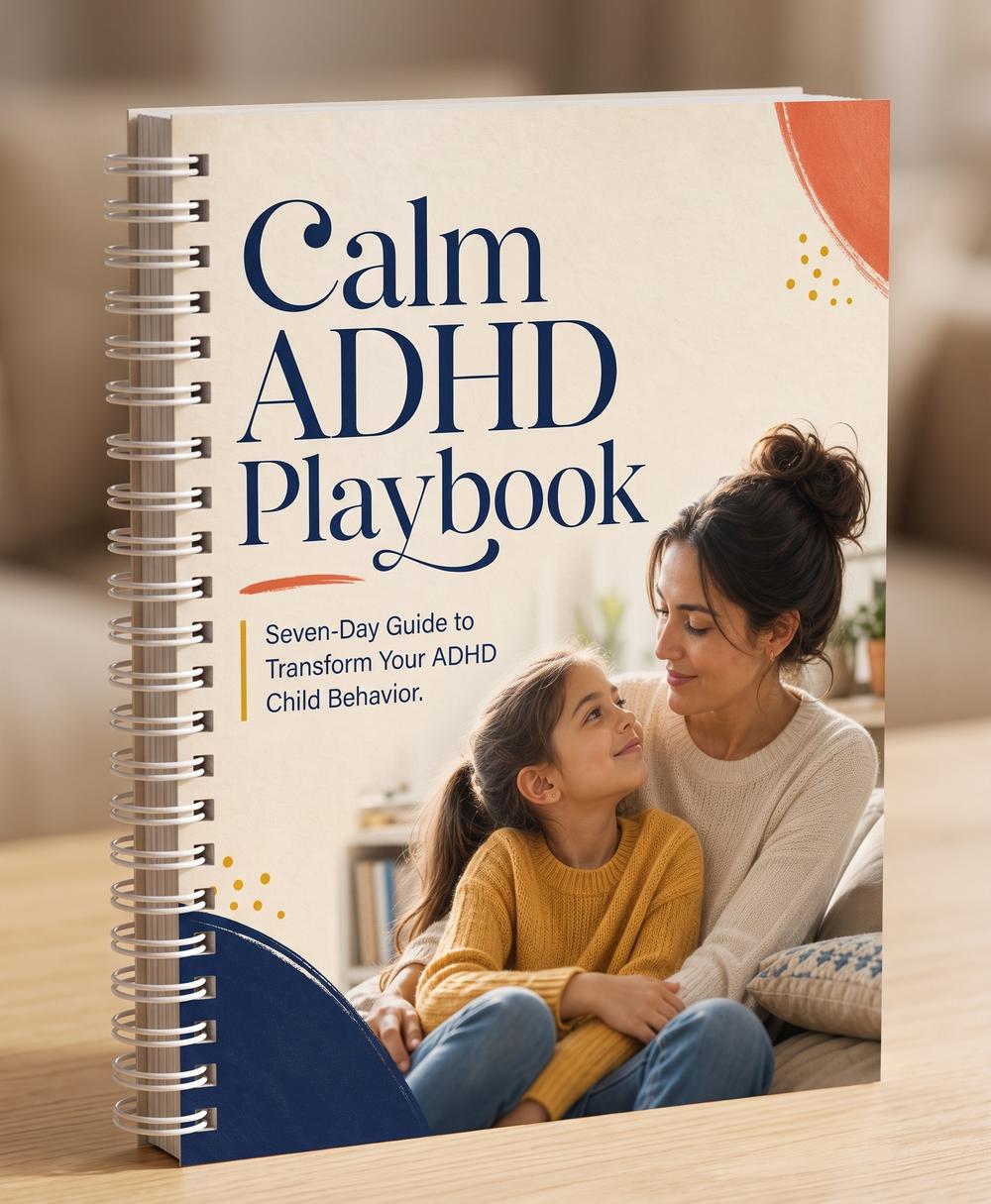
A clearer starting point
A seven-day, step-by-step guide that shows you exactly how the ADHD brain works and gives you the structures, scripts, and systems to work with it instead of constantly fighting against it.
This isn't another list of generic tips you've already tried. It starts with the neuroscience, including what can be happening with dopamine and prefrontal cortex development that makes memory, self-control, and follow-through harder for some children, then builds forward from there into a full week of concrete, doable changes to your home.
A practical week
Plain-language context for memory, self-control, and follow-through.
Charts and systems that make the next step visible.
Scripts and prompts for hard moments, repair, and connection.
You deserve a starting point that gives you something useful to try tonight.
A framework you can use
Most ADHD parenting content falls into one of two traps: it is either dense clinical literature written for professionals, or a listicle of tips with no underlying framework, so nothing sticks past the first hard day.
Useful context can be buried under professional language, leaving you to work out what it means for tomorrow morning, homework time, or the next hard moment.
A list of ideas can sound helpful until the first difficult day, when there is no clear way to choose a starting point, adapt the plan, or keep going.
The Calm ADHD Playbook brings both pieces together
It grounds you in why the ADHD brain can respond the way it does, then hands you the exact systems, charts, scripts, and goal templates to act on that understanding immediately.
You are not left to translate theory into practice on your own at 9pm after a long day. Each tool gives the understanding somewhere useful to go.
Charts
Make routines and progress visible.
Scripts
Give you words for the moment.
Goals
Turn a big change into a next step.
This is educational material, not a diagnosis or treatment plan. Results vary by child, family, and situation, so adapt each idea and bring clinical, school, safety, or developmental concerns to the appropriate qualified professional.
Inside the playbook
Each chapter gives you a focus, practical ideas, and a chance to notice what fits your child. Read through the week or go straight to the pressure point in front of you.
Begin by looking at what happens before, during, and after a hard moment. The guide helps you notice context, executive-function friction, and the strengths that are easy to miss when the day feels loud.
You will leave with: A clearer starting point for the support your child needs
External structure can carry some of the remembering and organising load. You will shape predictable routines, visible reminders, a workable homework space, and encouragement that tells your child exactly what is going well.
You will leave with: Fewer invisible expectations and more repeatable routines
Short instructions, attention-first cues, choices, and when-then language make everyday requests easier to receive. The chapter also covers active listening, validation, collaborative problem-solving, and calm, logical responses when things go wrong.
You will leave with: More cooperation without making every request a contest
Turn school tasks into smaller starts with a prepared space, timers, planned movement, and realistic focus blocks. You will also find prompts for talking with teachers about common school-day barriers and useful supports.
You will leave with: A school plan built around the task in front of your child
Role-play, modelling, stop-and-think cues, and a short pause can make social practice concrete. The guide also addresses friendship repair, bullying, assertiveness, trusted adults, and protecting self-esteem.
You will leave with: A kinder way to practise belonging and bounce-back skills
Body rhythms affect the whole household. This chapter brings together exercise, food routines, sleep-friendly wind-downs, calming spaces, mindful breathing, creative outlets, and stress reduction for parents and children.
You will leave with: A steadier foundation for mood, energy, and focus
The final day turns observations into a longer-term support plan. You will review progress, fine-tune what you tried, map your support network, and prepare thoughtful conversations with qualified professionals when medication or other care questions arise.
You will leave with: A practical plan you can revisit as your child grows
The Calm ADHD Playbook doesn't just tell you what to do. It asks you to build a token economy, a visual routine chart, a meltdown log, a feelings check-in, a homework tracker, and a nightly journal, all by hand. This pack is exactly that: eight professionally designed tools built to match those instructions chapter by chapter, so you can start using the system on day one instead of assembling it yourself in a notebook at 11pm.
Run the token economy from Chapters 2 and 3, with starter ideas so you are never staring at a blank page.
Break the two hardest transitions of the day into simple daily checkboxes.
Spot the patterns behind hard moments over two to three weeks.
Use eight illustrated emotion cards to help your child name what they are feeling before it becomes a meltdown.
Break multi-step assignments into visible, manageable steps.
Keep a daily page for wins, challenges, and what is working.
Track sleep, movement, and screen-time basics that support everyday family routines.
Use a Sunday check-in that pulls every chart together and sets direction for the week ahead.
Two formats: You receive a print-ready PDF for the fridge or a binder, plus a fillable digital version you can type into on your phone, tablet, or computer. No printer is required.
Educational note: The playbook offers general ideas, not medical advice. Adapt every suggestion to your child, and bring concerns about development, learning, sleep, medication, or safety to the appropriate qualified professional.
Questions before you start?
No. It is an educational parent guide with practical ideas for observation, routines, communication, school support, friendships, and wellbeing. It does not diagnose, prescribe, or replace advice from qualified healthcare or school professionals.
The playbook starts with noticing the pattern and choosing one manageable pressure point. It encourages you to adapt the environment, timing, language, and level of support rather than expecting one routine to fit every child or every day.
The seven-day structure is designed for a small daily step and a short reflection. You can read at your own pace, skip what does not fit, and return to the chapters that match the season your family is in.
The ideas can be adapted across childhood and the teen years. Examples involving school, friendships, independence, and professional support should always be adjusted for your child’s age and situation.
No. Use the guide to organise observations and questions, then bring concerns about development, safety, learning, sleep, medication, or mental health to the appropriate qualified professional.
No, Day 1 starts with the basics of what is happening in the ADHD brain, in plain language. It is built for parents who are just starting to understand the diagnosis as much as parents who have been at this for years.
Some families notice small practical shifts, often around routines and communication, within seven days. Bigger changes, including fewer meltdowns, may take three to four weeks of consistent use, and results vary by child, family, and situation. There is no guaranteed timeline.
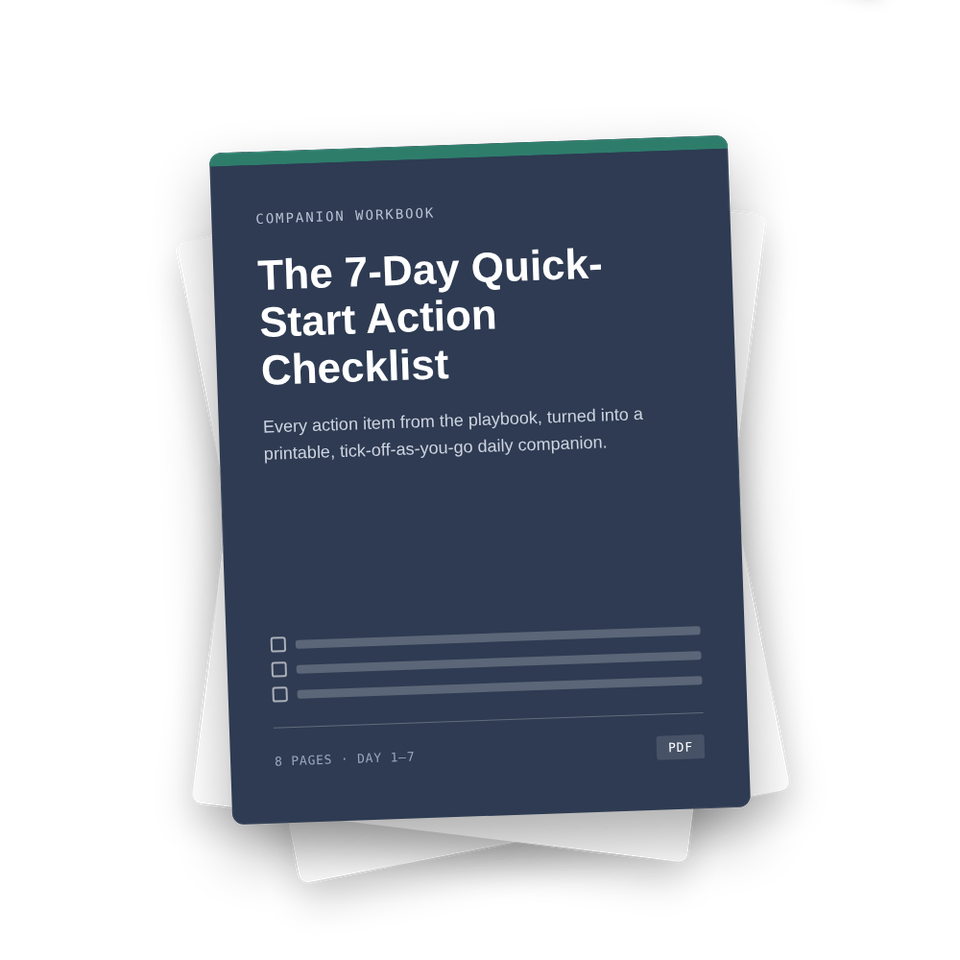
Every action item from the book, turned into a printable, tick-off-as-you-go workbook, so you always know what to do today.
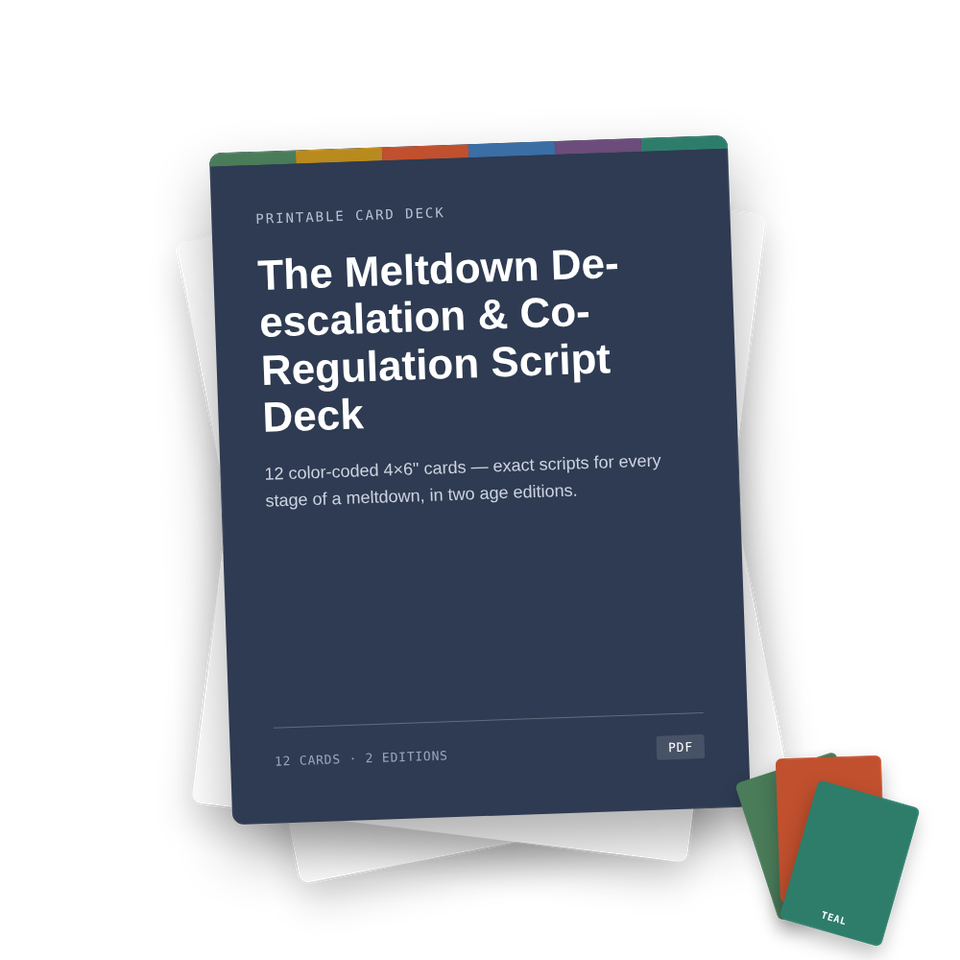
Colour-coded scripts for the exact moment your child's brain goes offline: what to say, what to avoid, and the body language that makes it work. Includes both a Younger Kids and an Older Kids edition.
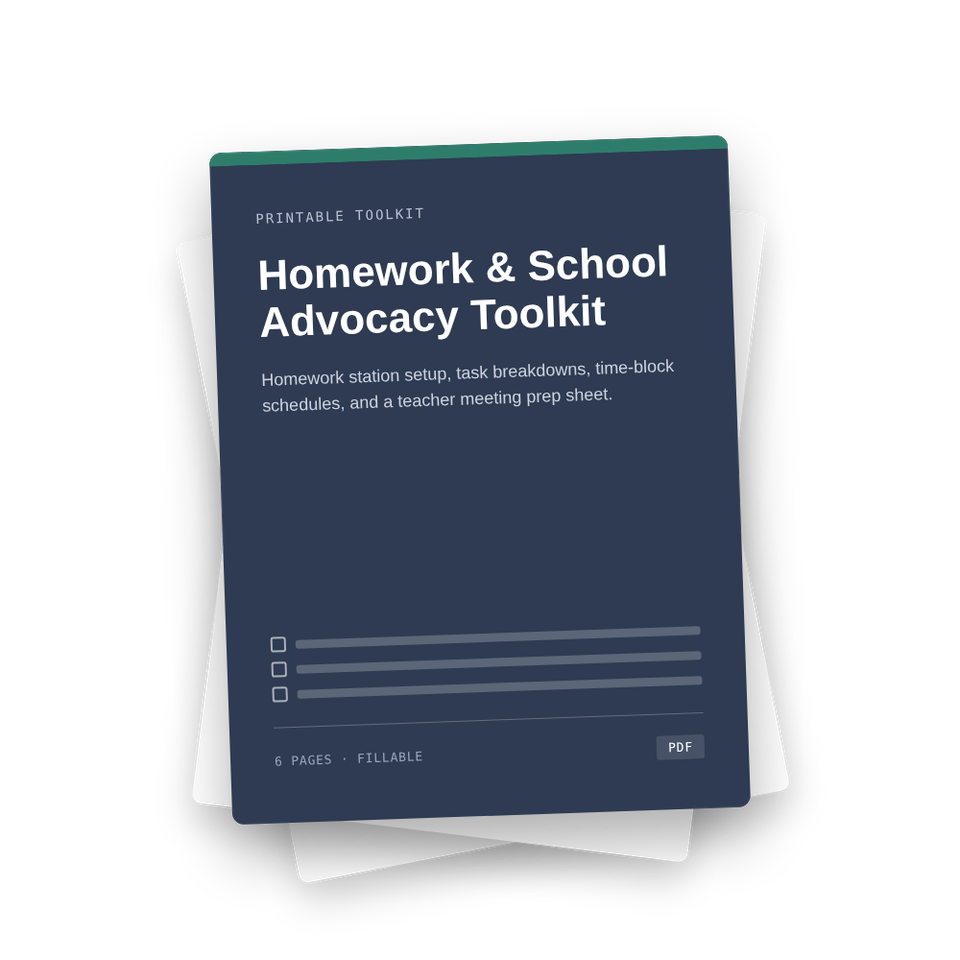
A homework station checklist, task-breakdown worksheet, time-block schedule, and teacher meeting prep sheet for calmer homework nights and better school meetings.
Total bonus value: $131, yours free today.
Ready to begin?
Complete your purchase below. Stripe securely handles payment, then your access link appears after payment is verified. $67 one time, with the optional Parent Reset Toolkit available for $17.
Your access link appears only after Stripe confirms payment.