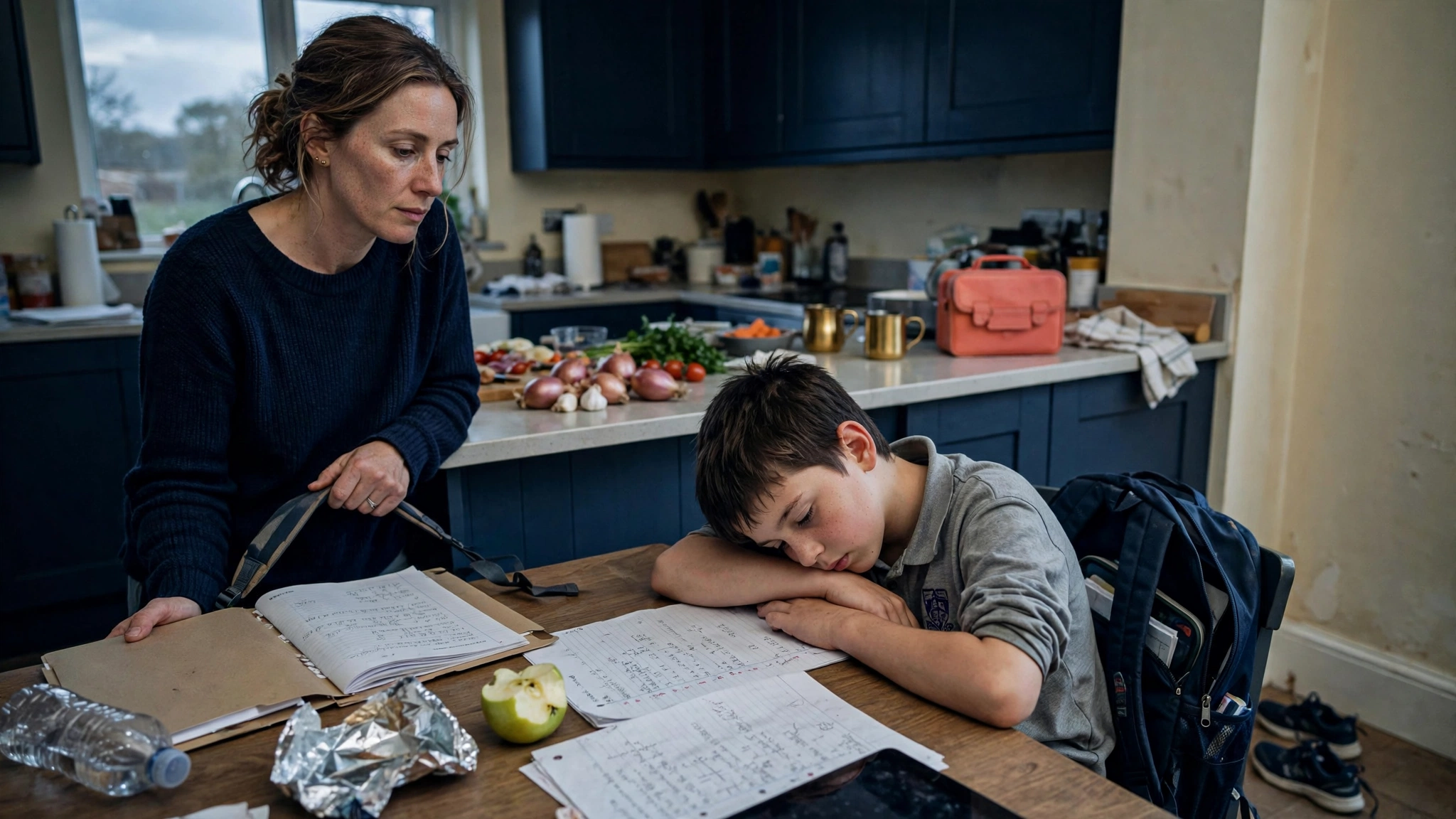
The ADHD After-School Crash: Why Evenings Unravel After Pickup
Picture this: the school bell rings, you pull up for pickup, and your child climbs into the car. They have held it together through lessons, breaks, and social whirl all day. You smile, ask how their day went, and suggest a quick snack at home. Then, the small ask lands like a boulder. Tears, shutdown, or a burst of live-wire energy. Suddenly, the evening feels like a steep hill, and you are already carrying bags, watching the clock, and starting dinner.
If this rings true, you are not alone. The ADHD after-school crash turns the hours between pickup and bedtime into the hardest stretch of the day for many families. It is not about bedtime battles alone. The unraveling often starts right at that school-to-home handoff, when capacity runs low after a high-demand day.
This guide names the moments in ADHD evenings that stack up, from decompression needs to overlapping tasks. We focus on recognition and one small experiment at a time. No full overhauls. Just practical support to protect the creative spark amid the after-school meltdown.
The School-to-Home Handoff
You turn the key in the ignition after pickup. Your child slumps in the back seat, staring out the window. A simple "What did you do today?" meets silence or snaps back sharp. By the time you reach home, unloading bags and shoes feels like negotiating a treaty.
This handoff moment can mark the start of the ADHD after-school crash. After six hours of focus, noise, and movement at school, the nervous system may signal overload. What looks like resistance is often depletion showing up.
No blame here, for your child who powered through the school day, or for you, juggling pickup with evening prep. Both bring deep-feel hearts to these transitions.
One experiment for tonight: Park the questions. Offer a quiet car ride with favourite music low. Let the first 20 minutes at home be for refuel and decompress, no asks stacked on arrival.
What the After-School Crash Can Look Like
The car door slams, and instead of relief, irritability flares. Or your child shuts down on the sofa, unresponsive to gentle nudges. Sometimes a second wind hits—live-wire energy bouncing off walls, knocking over the calm you hoped for.
These are signs of the after-school meltdown, not laziness or defiance. School demands sustained attention, masking skills, and sensory navigation. By pickup, reserves may run thin, leaving little for the after-school transition home.
This capacity dip affects everyone after high-demand days. For neurodivergent traits, the stack feels heavier.
- Depletion: floppy body, blank stare.
- Irritability: short fuse on small things.
- Shutdown: withdrawal into quiet or screens.
- Second wind: restless energy seeking outlet.
Blame-free lens: your child is not choosing chaos. You are not failing as the anchor. It is the high-demand day meeting evening load.
The Evening Transition Stack
Pickup leads to home arrival, then decompression jostles with hunger pangs. Homework looms before screens tempt. Reminders multiply: "Wash hands, then snack, then bag away." Bath nudges toward bedtime, but drift sets in. Each switch costs mental fuel.
In ADHD evenings, this ADHD evening routine stack overlaps. Hunger hits during decompression. Homework crashes into screen time. The ADHD after school window compresses it all, amplifying overwhelm.
One switch at a time makes evenings more workable. No need to tackle the full stack tonight.
Decompression First
Shoes hit the floor, bag drops. "Sit for snack," you say, but they wander, picking at nothing, eyes distant.
School's structure may leave little space to reset. A low-demand buffer can ease the after-school transition.
One experiment for tonight: Protect 20-30 minutes post-pickup. Set out a snack tray, dim lights, offer a beanbag or walk outside. No questions about school. Watch capacity return gently.
This honours the effort both gave to the day. Decompression protects the spark for what follows.
Hunger and Body Load
Mid-decompression, grumbles start. "I am not hungry," but hanger edges into every word. Lights feel too bright, clothes itch more.
Blood sugar dips and sensory load can stack on a tired system after school.
One experiment for tonight: Front-load refuel and decompress with a no-prep option—cheese sticks, fruit, or a smoothie. Place it visible before the first big ask. Notice if body calm follows.
No fault in the signals. Hunger hits harder after demand. You meet it with steady presence.
Homework Arriving Too Soon
Snack half-eaten, you nudge: "Time for homework." The page stares back, pen untouched. Protests rise, minutes tick.
Starting the homework line can demand more than finishing, especially post-crash.
Starting is often harder than the assignment. Read why ADHD homework starting is harder than the homework itself.
One experiment for tonight: Delay until after refuel. Put one visible next step on a card: "Open book to page 5." Sit nearby, no timer.
Effort counts. This eases without pressure.
Screens and the Next-Step Handoff
Homework pauses for "just five minutes" on a device. The timer beeps, but the switch stalls. Resistance builds to the handoff.
The pull away from screens can tax regulation when energy is low.
One experiment for tonight: One warning, then a visible next step: "Pause here, water bottle waits by sink." Place it ready. Transition feels less stacked.
Screens offer rest; the switch asks grace from both.
The Reminder Loop
"Brush teeth." Silence. "Now, please." Louder. "I said brush!" Voice rises, tension coils.
Repeated prompts can fray when attention drifts amid the evening stack.
One experiment for tonight: One ask, one channel. Get eye contact or a hand on the shoulder first: "Teeth next. Timer set?" Fewer loops build trust.
Reminders come from care. Drift does not mean disregard.
Bedtime Drift as the Last Switch
Lights low, stories read, but feet dangle off bed. "One more minute" stretches. The final handoff blurs.
After stacked transitions, bedtime lands as culmination, not standalone.
One experiment for tonight: Name it the last switch: "Bed now, story light on." Visible next step eases drift.
The day ends full, not failed.
One Support Focus, Not a Whole-Evening Overhaul
The ADHD evening routine tempts total redesign. Yet one experiment shifts more than scattered tries.
Choose one evening switch to support this week:
- Pickup: 20 minutes protected.
- Hunger: Snack before asks.
- Homework: Visible first step.
- Screens: One warning, next ready.
Small steps honour limits. Evenings grow more workable, spark intact.
An Educational Note
This article offers educational insights into ADHD after-school crash patterns. It supports recognition, not diagnosis. If sleep issues, safety concerns, or severe distress persist, consult an appropriate professional.
We celebrate strengths amid neurodivergent traits: creative spark, deep-feel heart, live-wire energy.
Find Practical Support for Your Next Hard Evening
Ready for one tailored focus? Take our free ADHD Superpower Quiz. It is short, free, educational, and asks no child name or medical details. Discover a practical support focus for evenings.
Find your child’s support focus
For the 60-second moment when words are hard, read what to say during an ADHD meltdown, or keep the free What Do I Say? ADHD Parent Cheat Sheet close.
One step towards calmer ADHD evenings is enough for tonight.