Why Starting ADHD Homework Is Harder Than the Homework Itself
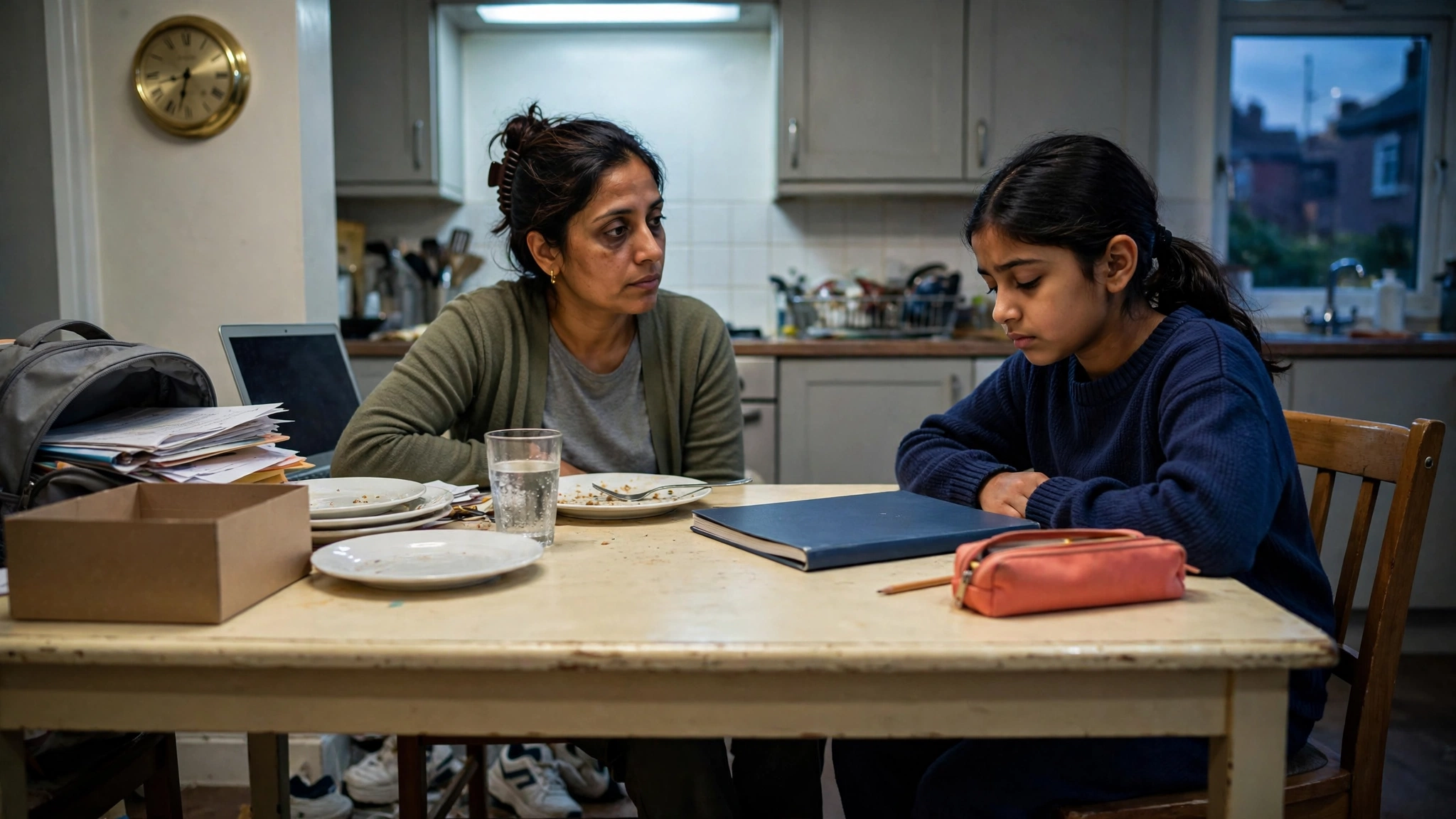
Picture this: the backpack sits zipped on the kitchen table, its contents untouched. A fresh pencil rolls idly beside a closed maths book. Dinner simmers on the stove, and you hover nearby, voice gentle but insistent. "Let's get started on homework." The assignment? A simple worksheet, ten questions at most. Yet the evening stretches on, the first line unwritten. The child who can hyperfocus on a favourite game for hours stares blankly, energy drained before a single problem is touched.
This is the homework starting line. For parents and caregivers facing ADHD homework struggles, it's a familiar battleground. Starting feels impossible, even when the work itself holds no terror. Capability hides behind that invisible barrier. Tonight, we explore why this happens and practical ways to ease across the line, without charts, consequences, or blame.
Why Starting Can Be the Hardest Part
Difficulty starting homework often is not about the task. It is the leap from rest to action that exhausts. Initiation, the spark to begin, can falter under certain conditions.
After a school day packed with transitions, switching to homework may demand more working memory than available. The brain, still buzzing from lessons and social demands, struggles to hold the plan: unpack bag, find worksheet, read instructions. What seems straightforward to an adult can feel like juggling flaming torches to a child navigating neurodivergent traits.
Interest plays a role too. Assigned work rarely matches the pull of a passion. A child might dive deep into drawing dinosaurs but freeze before a spelling list. This isn't contradiction; it's the brain prioritising what lights it up. Leftover school load compounds it—mental fatigue lingers, turning the next academic push into an uphill slog.
These ADHD homework struggles highlight a truth: the work may be doable once underway. The starting line steals the energy.
The After-School Crash Sits in Front of Homework
School ends, but the demands do not. The after-school dip hits hard: leftover focus, noise, and social load can show up as irritability or shutdown. Homework waits, but the body and mind may need recovery first.
Pushing straight into after-school homework ignores this. Mornings often hold more alertness; evenings can unravel. As we discuss in why ADHD evenings unravel after school, decompression rebuilds the reserves needed to approach the starting line.
Shrink the Starting Line
Enlarge the task, and paralysis grows. Shrink it to something tiny, visible, and finishable. Forget "do your homework." Try: "Open the book and write the date."
One Small Experiment
That moment when the backpack zips open but stays half-unpacked? Working memory may overload on the full sequence. Write the first step on a sticky note: "Open book. Write the date." Once done, notice it aloud—no fanfare, just recognition. This builds momentum without borrowing parental memory.
- Choose one sheet, one step.
- Celebrate the crossing, not the finish.
- Blame-free: if it sticks, great; if not, tweak tomorrow.
Make the Next Step Visible
Plans in a parent's head require the child to mind-read. Externalise them. A card with two boxes: "1. Date. 2. First question." Or a timer for a five-minute sprint.
ADHD homework starting eases when the path lights up. No working memory tax. The child sees, acts, completes.
Practical Try
Print a simple checklist. Tick one, move to two. If the plan fades, it's not willpower—it's invisible load.
Refuel and Decompress First
Body fuel powers brain start. A snack isn't a bribe; it's prerequisite. Movement or quiet time rebuilds.
15-Minute Buffer Experiment
Before any homework ask: snack + no school questions. Lie on the floor, bounce a ball, listen to music. Fifteen minutes. Then approach the line refuelled. This supports how to help a child with ADHD start homework by honouring the crash.
A Shorter Homework Routine Beats a Longer Battle
An hour of friction yields little. Ten focused minutes plus break? More workable. ADHD homework routine thrives on sprints, not marathons.
Hard-Night Version
Rough evening? Two questions or five minutes, then stop. Relationship intact trumps completion. Builds trust for next time.
Presence Without Hovering
Sit nearby with your book or tea. One prompt: "Ready for the date?" Then wait. Hovering sparks debate; quiet presence invites action.
Avoid "fairness" talks. Focus on the visible next step.
When Feelings Arrive at the Starting Line
A small ask can unleash overwhelm. Tears, frustration rise fast. Hold steady with short safety scripts: “I'm here.” “You're safe.” “I'm not going anywhere.” Read more in what to say during an ADHD meltdown, and keep the What Do I Say? ADHD Parent Cheat Sheet close for pocket-ready phrases.
Protect the Spark
The child glued to Lego for hours but stuck on worksheets? That's live-wire energy and creative spark at work. Not proof of "could if wanted." It's information: interest fuels flow. Channel it towards homework where possible—dinos in maths problems, say. Protect that gift; it points to strengths.
One Experiment, Not a New Chart
Skip behaviour trackers or consequences first. Pick one: sticky note step, buffer time, hard-night minimum. Test for a week. Adjust. Playbook-style strategies build from here, tailored for ADHD families.
A Note for School Support
These are educational ideas, not diagnostic tools. They don't assess learning or label ADHD. Persistent school worries? Partner with teachers and professionals for personalised support.
Find Practical Support for Your Family
Evenings at the starting line need not define you. Start with one visible step, one buffer, one spark-protected moment.
Discover your child's support focus with our free quiz. No names, no medical details, just one practical place to begin. Find your child’s support focus.
The line shrinks when we meet the child where they stand.